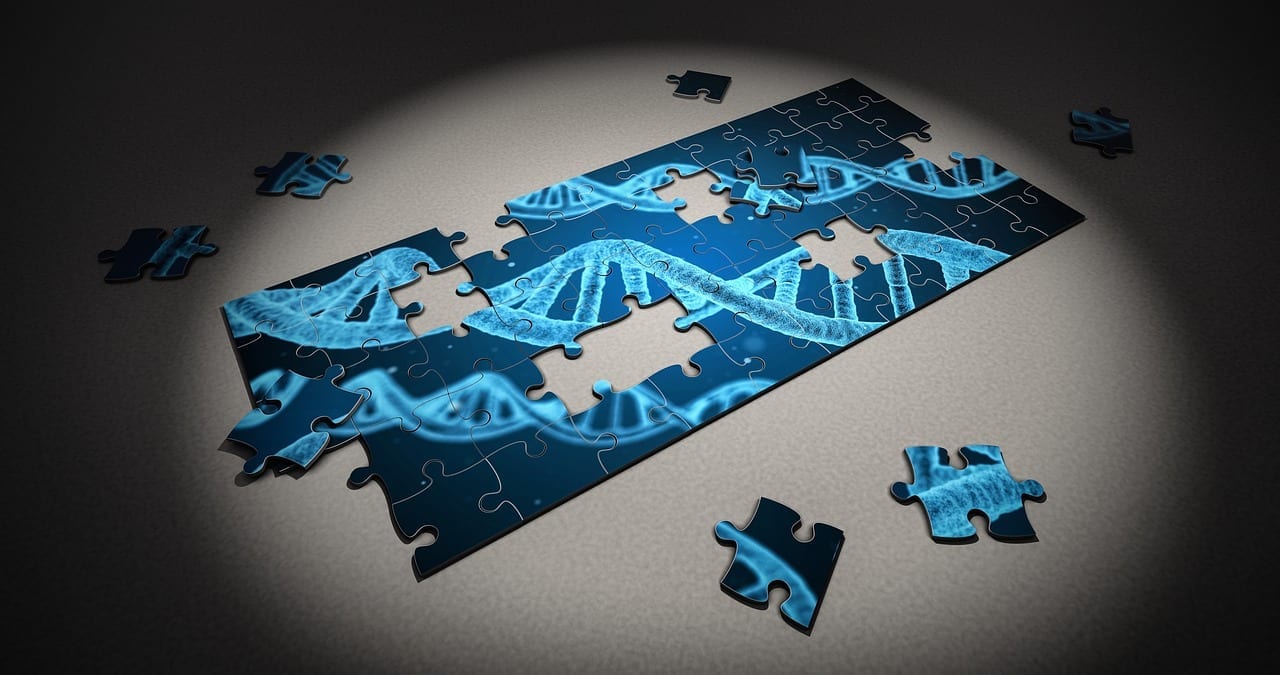
The decisions you make every day influence your personal health. Whether you decide to have that donut laden with trans fat and sugar or choose to run on the treadmill for 30 minutes ultimately affects your long-term health. The more good choices we make each day the better our health and the lower our risk of disease. But what if your decisions today affected not only your health but the health of your offspring for generations to come. As weird as this may sound, the field of epigenetics suggests this may be something we should consider as we make our daily choices.
What is Epigenetics?
Epigenetics is the study of potentially heritable (transmissible from parent to offspring) changes in gene expression that does not involve changes to DNA. Each of us has unique DNA contained in our cells ― unless you have an identical twin. Virtually every cell in our body contains all of our DNA and genes that make us who we are. Despite this similarity among most cells, difference cells perform different functions. Our brain cells act differently than our muscle cells, our skin cells perform different functions than our heart cells, and so forth. What differentiates their behavior is epigenetics. Epigenetics basically comprises the instruction aspect of our DNA that tells it what to turn on or off, up or down, and how and when to perform.
We inherit our genes from our parents and they cannot be changed. However, methyl groups (compounds made of carbon and hydrogen) are attached to genes that affect their expression ― whether genes are activated or deactivated (or turned up or down) to express a trait. The methyl groups are influenced in various ways, including eating, activity, and environmental exposures. So while epigenetics doesn’t alter our DNA, it does orchestrate what genes are expressed and when.
The exciting and emerging field of epigenetics continues to reveal how eating, activity, aging, disease state, and substances influence the human genome. Some experts believe that epigenetics will completely change the way we treat disease in the future.
How Essential Oils Influence Epigenetics
Landmark research, revealed that like other substances essential oils can influence the way our genes express. Through careful evaluation of billions of data points, it was discovered that essential oils fall into one of six zones of epigenetic influence: circulatory/respiratory, digestive/excretory, lymphatic/immune, muscular/reproductive, immune/nervous, and skeletal/integumentary. For example, helichrysum belongs to the skeletal/integumentary zone, orange to the muscular/reproductive zone, and myrtle to the circulatory/respiratory zone. By altering epigenetics, essential oils can profoundly influence the human genome and therefore human health.
To discover more about this exciting research read Synergy, It’s an Essential Oil Thing.
Hormones, Epigenetics, and Essential Oils
A woman’s hormones fluctuate each month during her fertility years and then alter again when her fertile years end. These fluctuations can lead to the uncomfortable symptoms of menstruation (cramps, minor mood changes, water retention, etc.) and menopause (hot flashes, vaginal dryness, etc.). Similarly, a man’s hormones (predominantly testosterone) tend to decline slowly after the age of 30, which can decrease performance and energy levels. Carefully balancing these hormones is key to healthy aging and well-being during our mature years.
Fortunately, this groundbreaking research revealed that certain essential oils play a role in overall hormone balance. While bioidentical hormones are an option for some women, an even better approach is to positively influence epigenetics in a way to improve the overall balance of all key hormones. The same can be said for males. Hormones are so tightly controlled within the body, that when one is deficient or excessive it cascades to the other hormones and soon you have a significant imbalance in multiple hormones. What the researchers found was that rosemary, lemon, vetiver, bergamot, clove, and tea tree essential oil positively affected the genes associated with female hormones such as progesterone, estrogen, and prolactin. For men, sweet basil, tea tree, bergamot, clove, eucalyptus (Eucalyptus globulus), and vetiver promoted positive expression of male hormones like testosterone. Knowing this allows us to create better balance of all hormones.
So the obvious question becomes how can we best utilize this research to promote normal hormone function in men and women? The following are essential oil formulas intended to do just that (added to a capsule for a systemic benefit):
Women
One drop each of the following in a capsule morning and evening with food and water, six days per week:
- Rosemary
- Lemon
- Vetiver
- Bergamot
- Clove
- Tea Tree
Alternately, create a blend with equal parts of the above oils. Add 3 drops of the blend to the capsule and take morning and evening with food and water, six days per week.
Men
One drop each of the following in a capsule morning and evening with food and water, six days per week:
- Sweet basil
- Tea tree
- Bergamot
- Clove
- Eucalyptus (Eucalyptus globulus)
- Vetiver
Alternately, create a blend with equal parts of the above oils. Add 3 drops of the blend to the capsule and take morning and evening with food and water, six days per week.
These statements have not been evaluated by the Food and Drug Administration. The products mentioned are not intended to diagnose, treat, cure, or prevent any disease. Always consult with a healthcare professional.