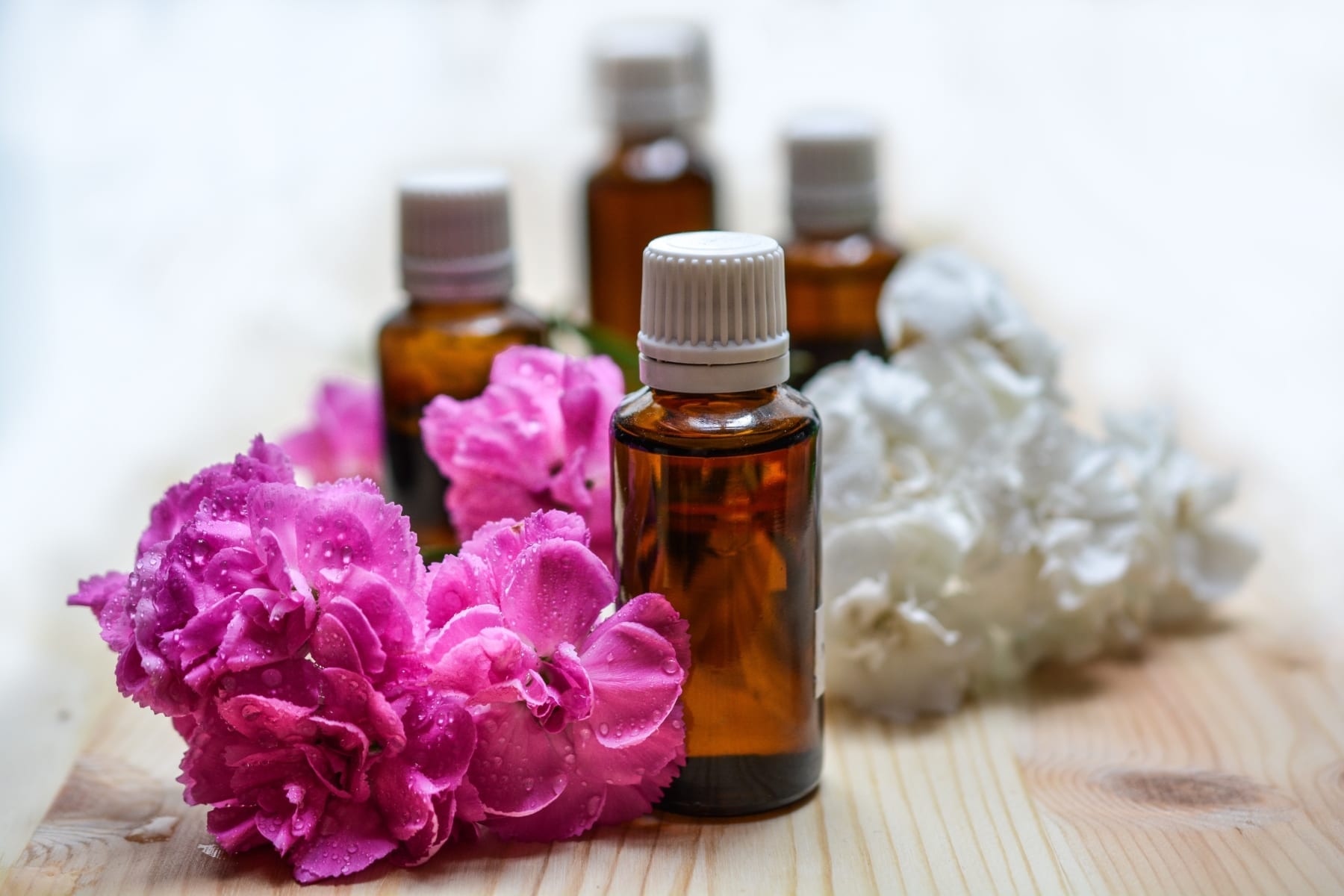
Hundreds of thousands of people enjoy diffusing essential oils daily to improve mood, relax, and create a more pleasant environment. But, a growing number of consumers are concerned that this practice may be harmful based on widely publicized reports that terpenes found in essential oils may interact with constituents in the atmosphere (carbon dioxide, methane, ozone, etc.) to form toxic oxidation products. Is this concern warranted or just hype from those who don’t believe essential oils have a place in the home?
Evidence suggests that terpenes in essential oils (limonene, alpha-pinene, linalool, etc.) are not harmful by themselves. However, their structure — comprised of one or more carbon to carbon bonds — makes them extremely susceptible to reactions with atmospheric constituents.(1,2) When these reactions occur, toxic oxidation products are produced such as formaldehyde, acetaldehyde, organic acid, and hydrogen peroxide, which are called hydroxyl radicals and secondary organic aerosols (SOAs).(3-6) These oxidation products can be harmful to human health.
Short-term exposure to oxidation products may cause sensory irritation, headache, dizziness, chest pain, and respiratory problems.(7-9) Children, the elderly, people who are obese, diabetics, and people with chronic respiratory disorders are more likely to experience these adverse health effects.
The risk of reactions between terpenes and atmospheric constituents is dependent on temperature and the amount of ozone present indoors. Reactions are more likely to occur in warm seasons when temperatures are higher as opposed to the colder temperatures of cold seasons.(10) In addition, higher levels of ozone provide more atmospheric constituents for essential oil terpenes to react with. Indoor ozone quantities can increase based on the amount of ozone present outdoors or use of certain equipment (laser printers, photocopiers, and some air cleaning units).
Limonene (found in two isometric forms: d-limonene — citrusy scent and found in citrus oils; and l-limonene — piney scent and found in tree oils) is more susceptible to these reactions than other terpenes like linalool. This suggests that essential oils with significant amounts of limonene may require more caution when diffusing, particularly during warm seasons and when the presence of ozone is elevated. To identify some essential oils with high limonene levels see Appendix A of Evidence-Based Essential Oil Therapy.
Synthetic terpenes are often used in cleaning products as scents and solvents. One study determined that the ordinary use of terpene-based cleaning products (typically synthetic limonene, not the limonene naturally found in essential oils) will not produce enough terpene reaction products to exceed safety levels set by regulatory agencies.(11) In other words, use of these cleaning products under normal circumstances is not likely to produce enough oxidation products to be harmful. And this is from an isolated synthetic molecule, which is far more prone to cause adverse effects than a balanced essential oil with all of its natural constituents.
Increased levels of ozone-terpene reaction products have also been observed in spas where essential oils were frequently used during massages and other treatments.(12) This is not surprising considering the amount of essential oils that could be used in a single day in a busy spa. By the end of a day, hundreds of drops of essential oils could have been used during spa treatments. But, remember all chemicals — even water — are dangerous at too high a concentration, and the research thus far suggests that the oxidation of terpenes does not reach levels considered unsafe. In addition, spas often offer other services that produce harmful chemicals like nail care, hair dyes, make-up treatments, and more.
The bottom line is that reasonable diffusing and use of essential oils is not likely to create enough oxidation products to be harmful to human health. The vast benefits of diffusing essential oils far outweigh the minimal risks of producing oxidation products. However, certain populations — children, the elderly, people who are obese, diabetics, and people with chronic respiratory diseases should be more cautious when diffusing essential oils. In addition, it is prudent to take steps to reduce the risk of forming terpene oxidation products.
Here are some tips to reduce the risk of excess formation of terpene oxidation products:
- set your diffuser to intermittent so it is not constantly diffusing essential oils into the air, but releases them at intervals;
- add only 1-3 drops of essential oils per 100 mL of water to your diffuser at one time;
- diffuse for shorter periods of time (30 to 60 minutes continuously before taking a few hours break);
- limit diffusion of citrus and tree oils that are high in limonene;
- make sure the room you diffuse in is well ventilated;
Secondly, here are some tips to reduce ozone in your indoor environment by:
- avoiding the use of indoor “air cleaners” that emit ozone intentionally (ozone generators) or as a byproduct of their design (ionizers, electrostatic precipitators);
- making sure rooms with office equipment (laser printers, copiers, etc.) are well ventilated;
- avoiding the use of oil- and solvent-based paints, degreasers, and lighter fluid;
- and increasing the number of indoor plants in your home.
(1) Nazroff WW, Weschler CJ. Cleaning products and air fresheners: exposure to primary and secondary air pollutants. Atmos Environ. 2004;38:2841-65.
(2) European Collaborative Action. Urban air, indoor environment and human exposure, report No. 26: Impact of Ozone-initiated Terpene Chemistry on Indoor Air Quality and Human Health. 2007.
(3) Wang B, Lee SC, Ho KF, et al. Characteristics of emissions of air pollutants from burning of incense in temples. Hong Kong Sci Total Environ. 2007;377:52-60.
(4) Waring MS, Wells JR, Siegel JA. Secondary organic aerosol formation from ozone reactions with single terpenoids and terpenoid mixtures. Atmos Environ. 2011;45:4235-42.
(5) Waring MS. Secondary organic aerosol in residences: predicting its fraction of fine particle mass and determinants of formation strength. Indoor Air. 2014;24:376-89.
(6) Pathak RK, Salo K, Emanuelsson EU, et al. Influence of ozone and radical chemistry on limonene organic aerosol production and thermal characteristics. Environ Sci Technol. 2012;46:11660-69.
(7) Nojgaard JK, Christensen KB, Wokoff P. The effect on human eye blink frequency of exposure to limonene oxidation products and methacrolein. Toxicol Lett. 2005;156:241-51.
(8) Wolkoff P, Clausen PA, Wilkins CK, et al. Formation of strong airway irritants in terpene/ozone mixtures. Indoor Air. 2000;10:82-91.
(9) Wolkoff P, Clausen PA, Larsen ST, et al. Airway effects of repeated exposures to ozone-initiated limonene oxidation products as model of indoor air mixtures. Toxicol Lett. 2012;209:166-72.
(10) Geiss O, Giannopoulos G, Tirendi S, et al. The AIRMEX study VOC measurements in public buildings and schools/kindergartens in eleven European cities; Statistical analysis of the data. Atmos Environ. 2011’45:3676-84.
(11) California Air Resources Board and the California Environmental Protection Agency: California Air Resources Board Research Division Indoor Air Chemistry: Cleaning Agents, Ozone and Toxic Air Contaminants. 2006 Apr.
(12) Hsu DJ, Huang HL, Sheu SC. Can Aromatherapy Produce Harmful Indoor Air Pollutants? Environ Engineering Sci. 2011 Oct.