The emergence of the novel SARS-coronavirus 2 (SARS-CoV-2) and the subsequent pandemic it has caused reignited discussions about a common complication of respiratory illnesses known as a cytokine storm. This phenomenon became more widely known outside of medical and research circles after the 2005 avian H5N1 influenza virus outbreak. Illnesses like COVID-19 and influenza can be fatal if a cytokine storm occurs. The scramble to find solutions for cytokine storms has increased since it was associated with a poor outcome after infection with SARS-CoV-2. As usual, Mother Nature has beat drug manufacturers to the punch and provided us tools to keep us healthy. Here are three natural solutions that can help halt a cytokine storm.
What is a cytokine storm?
Cytokines are proteins released by cells, including immune cells, involved in cell signaling. These chemical messengers coordinate the immune system’s response against infection and increase inflammation. Important pro-inflammatory (cause inflammation) cytokines involved in cytokine storms include tumor necrosis factor alpha (TNF-α), interleukin 1 alpha (IL-1α), interleukin 1 beta (IL-1β), and interleukin 6 (IL-6).
After infection by a pathogenic germ, your immune system activates troops—like white blood cells—and innate defenses to efficiently control the invader and maintain a healthy state. Sometimes the body’s response to infection overreacts and becomes harmful rather than helpful. When this occurs, activated white blood cells release excessive inflammatory cytokines in response to an invader, which in turn activates more white blood cells. This dangerous feedback loop makes the immune system go into overdrive and allows inflammation to flare out of control. If this cascade of events isn’t resolved quickly, the germ becomes more aggressive and causes severe illness. The subsequent inflammation damages tissues and organs, which can seriously harm or even kill a person.
Cytokine storms can partially explain why younger people are not as affected by COVID-19 and why people with preexisting conditions like diabetes, heart disease, and respiratory diseases are more likely to experience severe illness or die. Young people tend to produce lower levels of inflammatory cytokines and people with certain preexisting conditions have a decreased ability to regulate immune responses. Dysfunction of the immune system makes people more susceptible to an overactive immune response and the release of massive numbers of inflammatory cytokines. Moreover, research shows that older persons tend to have elevated levels of inflammatory cytokines, which makes them more susceptible to experience a cytokine storm after certain infections.
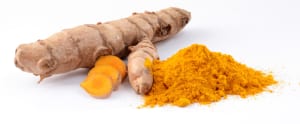
Turmeric
Used for centuries for inflammation, turmeric and its active constituent curcumin, are a promising natural solution for cytokine storms. Curcumin blocks the release of pro-inflammatory cytokines such as the IL-1 family, IL-6, and TNF-α. (1) Experimental models of illnesses where cytokine storm plays a significant role in severity and mortality demonstrate that curcumin helps improve the subjects condition. It plays such a significant role in regulating the inflammatory and immune responses that the study authors called it as “a potential therapy for patients with Ebola and other severe viral infections.” Another experimental model reported that turmeric reduced the release of pro-inflammatory cytokines when taken after influenza A infection. (2) This shows that turmeric and curcumin can help regulate the immune response and control inflammation after infections.
Emerging clinical research supports the preliminary experimental trials. A clinical study found that taking 500 mg of curcumin twice daily reduced pro-inflammatory cytokine release in people with metabolic syndrome. (3) Another study demonstrated that taking 500 mg of curcumin three times a day decreased inflammatory cytokines in people suffering from chronic pulmonary complications. (4) These studies suggest that taking 500 mg of turmeric—standardized to curcumin content—two or three times daily may help control inflammatory cytokine release.
One of the challenges with turmeric is the poor bioavailability of curcumin. To overcome this, take turmeric with turmeric essential oil (7- to 10-fold higher bioavailability), fenugreek galactomannan (15.8 times greater bioavailability, or turmeric black pepper extract to increase absorption (2000% increase in bioavailability). (5),(6),(7) Most studies use 500 mg of turmeric two to four times daily.

Omega-3 fatty acids
Found in fish and red algae, the omega-3 fatty acids eicosapentaenoic acid (EPA) and docosahexaenoic acid (DHA) are unique because they are precursors to the production of lipid-based inflammatory mediators called resolvins. Resolvins help resolve cytokine release without dampening the inflammatory response completely. This allows the immune system to continue its inflammatory assault against the germ but not overreact and cause tissue damage. (8)
Supplementation with 1.5 grams of EPA and 1.0 grams of DHA daily significantly reduced blood levels of inflammatory cytokines in older adults. (9) Several additional studies show supplementation with DHA and EPA reduces the production of pro-inflammatory cytokines. (10),(11),(12)
A typical fish oil capsule contains about 180 mg of EPA and 120 mg of DHA. Some supplements are concentrated to provide 250 to 500 mg of EPA or DHA per capsule. These are far from therapeutic levels, so you need to take multiple capsules to get an optimum amount of DHA and EPA. Aim for at least 2000 mg of total DHA and EPA (for example 100 mg of DHA and 1000 mg of EPA) daily for maximum effects. Lower amounts are not likely to reduce pro-inflammatory cytokine production.

Copaiba essential oil
Derived from the oleoresin of Copaifera species trees, copaiba essential oil contains very high levels of the sesquiterpene and cannabinoid beta-caryophyllene. This bioactive constituent can directly bind to CB2 receptors in the immune system and regulate immunity and inflammation. Experimental models demonstrate that copaiba essential oil significantly reduces the production of pro-inflammatory cytokines and helps control the immune response to infections. (13),(14) Clinical studies for copaiba essential oil are sparse currently but anecdotal evidence from tens of thousands of people show that copaiba oil can reduce inflammation and support healthy immune and respiratory function.
Because of a lack of clinical research, the optimum amount of copaiba oil to take is a bit of a mystery. Commonly used amounts are one to two drops directly under the tongue up to three times daily or three to five drops in an empty vegetable capsule (fill the rest with olive oil) up to five times daily. Adding a drop of lavender, lemongrass, or fir (balsam of Siberian) to the capsule can augment the bioavailability and activity of copaiba oil.
Disclaimer: These statements have not been evaluated by the Food and Drug Administration. The mentioned natural solutions are not intended to diagnose, treat, cure, or prevent any disease. Consult an integrative health professional before using the solutions.